
You’ve made Spinach & Ricotta Stuffed Chicken before. It’s a classic for a reason. But I bet it sometimes feels a bit dry, or the filling wants to escape in the oven. I know that frustration.
What if I told you there’s one simple, often-overlooked ingredient that solves both problems? It’s not a fancy spice or a rare cheese. It’s a humble pantry staple that changes the texture completely. Ready to find out what it is?
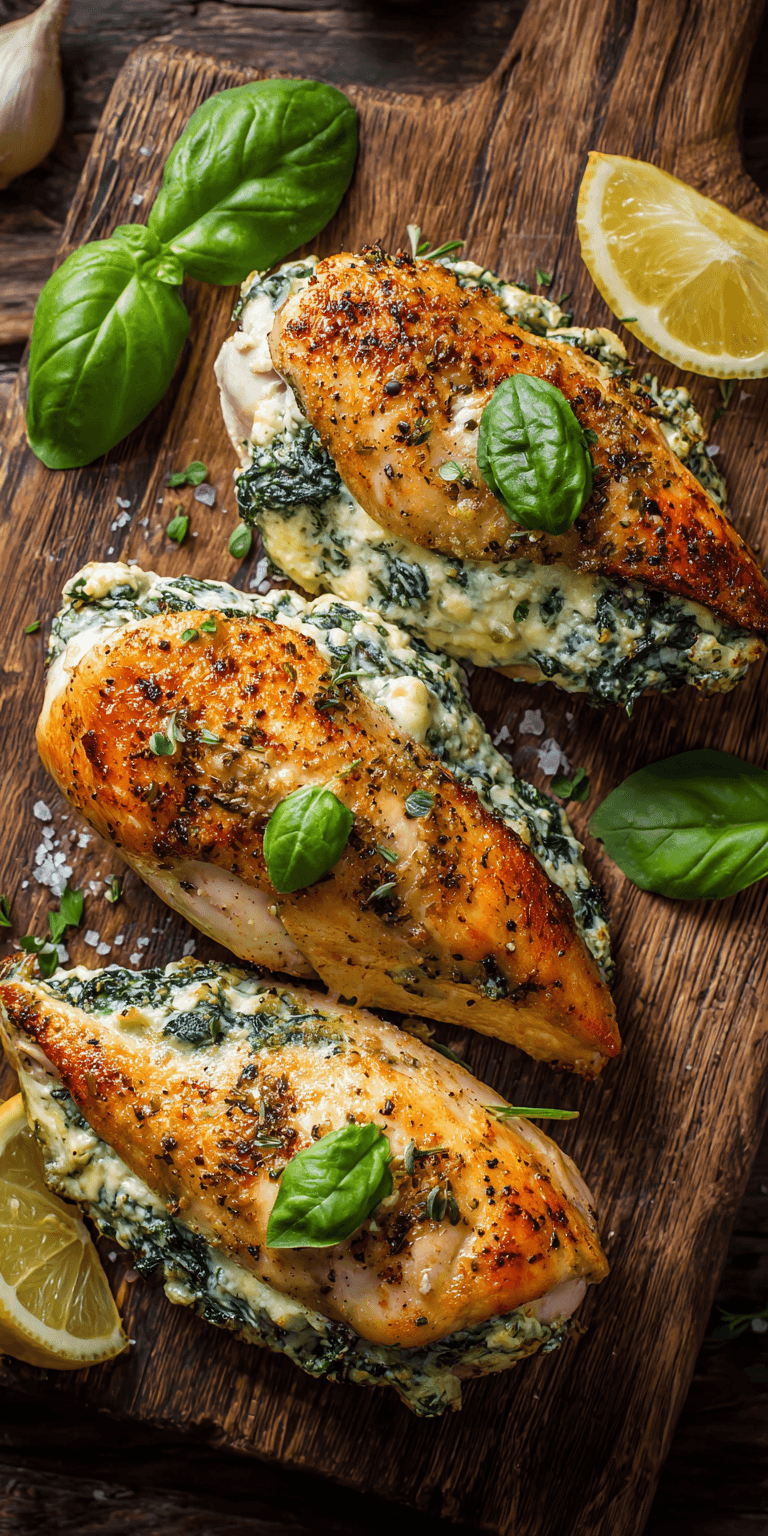
This version is the one you’ll make on repeat. It’s juicy, packed with flavor, and holds together perfectly. Let me show you how my pro-method makes all the difference.
Recipe Overview
- Cuisine: Italian-Inspired
- Category: Main Course
- Prep Time: 20 minutes
- Cook Time: 25 minutes
- Total Time: 45 minutes
- Servings: 4
The Secret Ingredient That Makes All the Difference
Here it is: a single egg yolk. You mix it right into the ricotta and spinach filling.
Most recipes just tell you to combine the ricotta and spinach. That works, but it can be loose. The egg yolk acts as a binder. It enriches the filling, giving it a creamier, more luxurious texture that sets gently as it cooks.
This means no more runny, leaking filling. You get a perfect, sliceable pocket every single time. It’s a small step with a huge payoff.
Why This Method is Better (My Pro-Tips)
My biggest tip isn’t about the stuffing. It’s about the chicken itself. We’re not just cutting a pocket. We’re butterflying and pounding.
Spinach & Ricotta Stuffed Chicken Recipe
The “Upgraded” Ingredient List
The Pro-Method (Step-by-Step)
Notes
Enjoy your homemade Spinach & Ricotta Stuffed Chicken Recipe!
Butterflying creates a larger, even surface for the filling. A light pounding then ensures uniform thickness. This is the key to even cooking. No more raw spots near the bone or overcooked, chewy edges. It cooks through perfectly, staying incredibly moist.
The “Upgraded” Ingredient List
- 4 boneless, skinless chicken breasts (about 6-8 oz each)
- 1 tbsp olive oil
- Salt and black pepper
- 10 oz frozen chopped spinach, thawed and squeezed VERY dry
- 1 cup (8 oz) whole-milk ricotta cheese
- 1/2 cup freshly grated Parmesan cheese
- 1 large egg yolk
- 1 clove garlic, minced
- 1/4 tsp freshly grated nutmeg
- 1/2 tsp lemon zest
- 1 cup marinara sauce (optional, for serving)
The Pro-Method (Step-by-Step)
Follow these steps in order. This is where the magic happens.
- Heat your oven to 400°F (200°C). Pat the chicken breasts completely dry with paper towels.
- Butterfly each breast: Place one hand on top and slice horizontally through the thickest part, stopping about 1/2 inch from the opposite edge so it opens like a book.
- Open the butterflied breast, cover with plastic wrap, and gently pound with a meat mallet or rolling pin until it’s an even 1/2-inch thickness. Repeat with all breasts.
- Season both sides of each pounded breast generously with salt and pepper.
- In a medium bowl, combine the squeezed-dry spinach, ricotta, Parmesan, egg yolk, garlic, nutmeg, and lemon zest. Mix until fully incorporated. Taste and adjust seasoning.
- Divide the filling among the chicken breasts, mounding it on one half of each opened breast. Leave a 1-inch border around the edges.
- Fold the empty half of the chicken over the filling. Use 3-4 toothpicks to securely “stitch” the open edges closed. Don’t be shy here.
- Heat olive oil in a large, oven-safe skillet over medium-high heat. Carefully place the stuffed breasts in the hot skillet. Sear until deeply golden brown, about 3-4 minutes per side.
- If using marinara, pour it around (not over) the chicken in the skillet. Transfer the entire skillet to the preheated oven.
- Bake for 18-22 minutes, or until the internal temperature of the chicken reaches 165°F. Let rest for 5 minutes before carefully removing the toothpicks and slicing.
Common Mistakes & How to Fix Them
Problem: A wet, leaking filling. Fix: You must squeeze the thawed spinach until it feels completely dry. Use your hands and press it in a clean kitchen towel or cheesecloth. Any remaining water will steam out and make the filling soggy.
Problem: Underseasoned chicken. Fix: Season the chicken breasts before you add the filling. Salt needs direct contact with the meat to do its job. Seasoning only the outside after stuffing isn’t enough.
Problem: The filling spills out during searing. Fix: Your skillet wasn’t hot enough. A proper sear instantly sets the exterior of the chicken, sealing it. Wait for the oil to shimmer before adding your stuffed breasts.
Variations for the Adventurous Cook
Once you’ve mastered the base, play with it. Swap the Parmesan for crumbled feta or goat cheese for a tangier bite.
Add 1/4 cup of finely chopped sun-dried tomatoes or artichoke hearts to the filling for a flavor boost. For a richer sauce, finish the dish with a drizzle of browned butter with sage instead of marinara.
Nutrition Notes
- This is a fantastic high protein, low carb dinner option.
- Using whole-milk ricotta provides healthy fats for satiety.
- Spinach adds iron and fiber.
- Exact counts vary, but one serving typically provides over 35g of protein and less than 10g of net carbs.
Your Pro-Level Questions Answered
Can I make this stuffed chicken ahead of time?
Absolutely. You can assemble the stuffed, toothpick-secured breasts up to a day in advance. Store them covered on a plate in the fridge. Let them sit at room temperature for 20 minutes before searing. The searing step is crucial for food safety when prepping ahead.
What’s the best tool for pounding chicken?
A flat meat mallet is ideal. If you don’t have one, the bottom of a heavy skillet or a rolling pin works. The key is to use even pressure and the plastic wrap to prevent tearing and keep things clean.
My chicken is always dry. How do I avoid that?
Two things: First, don’t skip the pounding step for even thickness. Second, and most importantly, use a digital meat thermometer. Pull the chicken from the oven at 160°F. The temperature will carry over to 165°F as it rests, giving you perfectly juicy meat.

A Few Final Secrets
Let the chicken rest for a full 5 minutes after baking. This allows the juices, which have rushed to the surface during cooking, to redistribute back throughout the meat. If you slice immediately, all that flavorful juice will end up on your cutting board, not in your bite.
For a beautiful presentation, spoon a little warm marinara on the plate first. Place a sliced stuffed breast on top, and finish with a fresh grating of Parmesan and a crack of black pepper.
Now you have all my secrets. The egg yolk binder, the butterflying method, the pro-tips—they all add up to the best version of this dish you’ll ever make. I want to hear from you. Did this method change your stuffed chicken game? Tell me all about it in the comments and leave a rating below!