

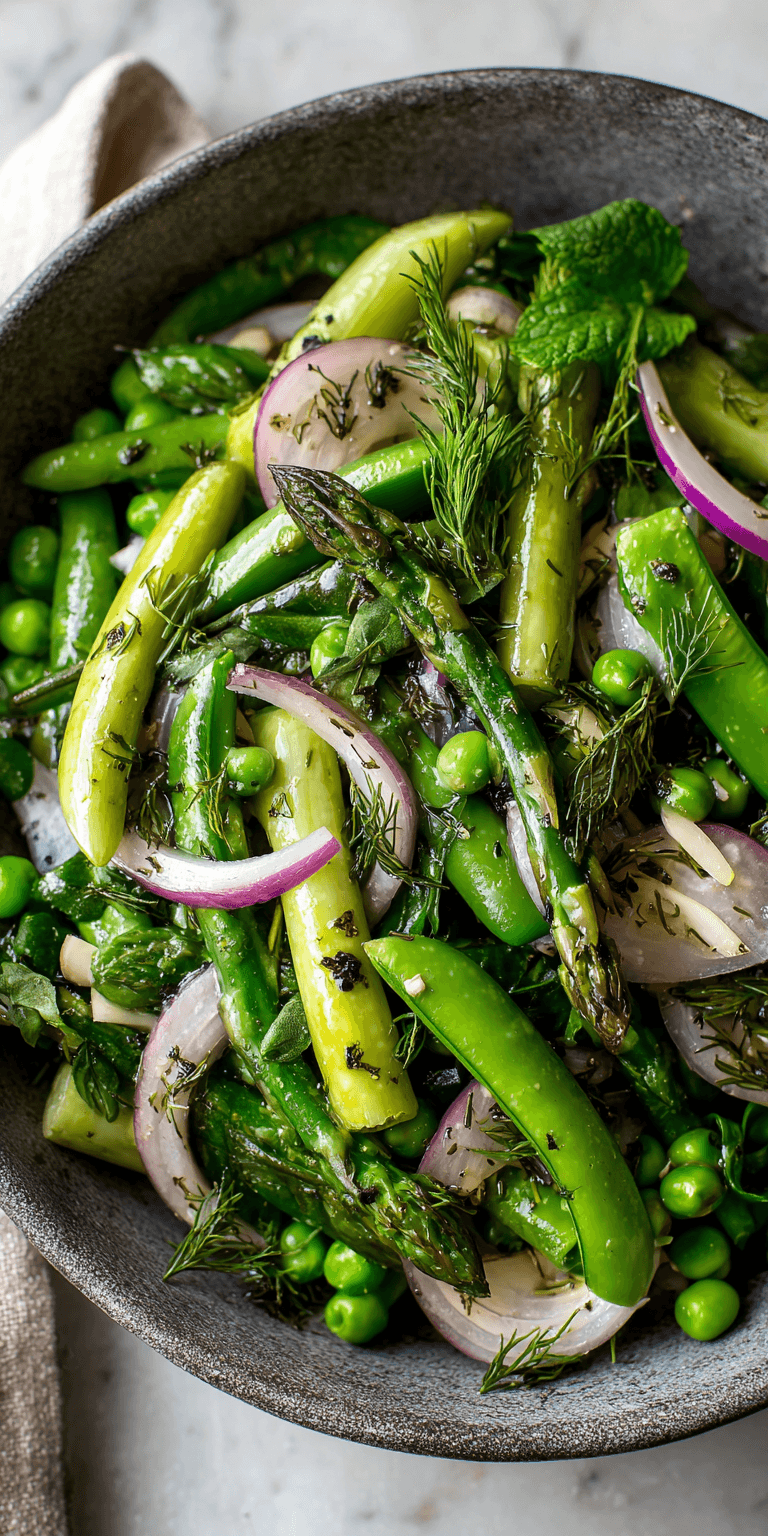
You’ve made a warm vegetable salad before. But you’ve never made it like this. The secret to this Sautéed Spring Vegetable Salad isn’t just one ingredient. It’s a technique that unlocks a depth of flavor you thought was impossible for a veggie dish.
I’m going to show you how to transform simple spring produce into a rich salad that stands as a hearty, healthy main event. This isn’t a side thought. It’s the star of your spring and summer dinner table.
Ready to learn the method that makes every other warm spring salad seem bland? Let’s get into it.
Recipe Overview
This is your blueprint for the ultimate spring veggie dish. Keep this overview handy as we dive deep into the secrets.
- Cuisine: Modern American
- Category: Salad / Main / Side
- Prep Time: 15 minutes
- Cook Time: 12 minutes
- Total Time: 27 minutes
- Servings: 4 as a main, 6 as a side
The Secret Ingredient That Makes All the Difference
It’s not truffle oil or some rare spice. The secret is white miso paste. I know, it sounds unconventional for a spring dish.
Sautéed Spring Vegetable Salad Recipe
The “Upgraded” Ingredient List
The Pro-Method (Step-by-Step)
Notes
Enjoy your homemade Sautéed Spring Vegetable Salad Recipe!
But hear me out. When whisked into a warm vinaigrette, miso performs magic. It doesn’t taste “soy” or “Asian.” Instead, it adds a profound, savory umami backbone that makes the sweet vegetables pop.
It clings to every asparagus spear and pea, creating a flavor coat that simple oil and vinegar can’t achieve. This one move upgrades your salad from “fresh” to “unforgettable.”
Why This Method is Better (My Pro-Tips)
Most recipes will tell you to toss raw greens with warm veggies. That’s a mistake. It wilts the lettuce into a sad, soggy mess.
My method? We build a warm, miso-infused vinaigrette in the pan after sautéing. We then dress a sturdy, separate base of greens. The warm dressing just barely kisses the leaves, wilting them ever so slightly.
The result is a perfect contrast: vibrant, warm vegetables atop greens that are softened but still have life and texture. This control is what separates a pro cook from a home cook.
The “Upgraded” Ingredient List
Every component here is chosen for a reason. Quality matters, especially when the dish is this simple.
- 1 lb baby potatoes, halved (Yukon Gold or similar)
- 2 tbsp extra virgin olive oil, divided
- 1 large bunch asparagus, trimmed and cut into 2-inch pieces
- 1 cup fresh sugar snap peas or snow peas
- 1 small fennel bulb, thinly sliced (fronds reserved!)
- 1 large shallot, thinly sliced
- 2 cloves garlic, minced
- 5 oz baby kale or sturdy spinach
- 1/2 cup fresh mint leaves, roughly chopped
- 1/3 cup toasted almonds or hazelnuts, roughly chopped
- 4 oz fresh goat cheese or feta, crumbled
For the Secret Miso Vinaigrette:
- 3 tbsp extra virgin olive oil
- 2 tbsp apple cider vinegar or white wine vinegar
- 1 tbsp white miso paste
- 1 tsp honey or maple syrup
- 1 tsp Dijon mustard
- Zest and juice of 1/2 a lemon
- Salt and freshly cracked black pepper
The Pro-Method (Step-by-Step)
Follow these steps precisely. The timing is everything for perfect texture.
- Par-cook the potatoes: Place halved potatoes in a pot, cover with cold salted water, and bring to a boil. Cook for 8-10 minutes until just tender. Drain well. This ensures they finish cooking perfectly in the pan.
- Sear for texture: Heat 1 tbsp oil in a large skillet over medium-high heat. Add the drained potatoes, cut-side down. Sear undisturbed for 3-4 minutes until golden and crisp. Remove to a plate.
- Sauté in stages: In the same pan, add remaining 1 tbsp oil. Add the asparagus, snap peas, and sliced fennel. Sauté for 3-4 minutes until bright green and crisp-tender.
- Build the flavor base: Push veggies to the side. Add the shallot and garlic to the center. Cook for 1 minute until fragrant. Return potatoes to the pan and toss everything together. Remove from heat.
- Make the pan sauce/vinaigrette: In a small bowl, whisk the miso paste with the vinegar, honey, and mustard until smooth. Slowly whisk in the 3 tbsp olive oil. Pour this mixture into the warm (off-heat) skillet with the veggies. Add lemon zest and juice. Toss to coat. The residual heat will meld the flavors.
- Assemble with intention: In a large, wide bowl, combine the baby kale and most of the mint. Pour the warm vegetables and every bit of the dressing from the pan over the greens. Toss gently just once or twice.
- The Final Touch: Transfer to a serving platter. Top with crumbled cheese, toasted nuts, reserved fennel fronds, and the remaining mint. Serve immediately.
Common Mistakes & How to Fix Them
Even advanced cooks can stumble here. Let’s avoid these pitfalls.
Mistake 1: Overcrowding the Pan. Adding all veggies at once steams them. You lose the beautiful sautéed color and flavor. Fix: Cook in batches if needed. Give the potatoes space to sear. Let the green veggies hit the pan in a single layer.
Mistake 2: Dressing the Greens Too Early. Pouring the hot veggies directly onto the greens and letting it sit wilts them into oblivion. Fix: Assemble at the very last second before serving. The goal is a warm, not cooked, green base.
Mistake 3: Not Toasting Your Nuts. Raw nuts lack depth. Fix: Always toast nuts in a dry skillet until fragrant. It unlocks their oils and adds a crucial crunchy, savory element to this hearty healthy salad.
Variations for the Adventurous Cook
Mastered the base recipe? Here’s how to play with it. These are pro-level swaps that maintain the dish’s integrity.
Protein Power: Add seared scallops, grilled shrimp, or shredded roast chicken right at the end. For a vegan boost, crispy chickpeas sautéed with the potatoes are incredible.
Cheese Swaps: Swap goat cheese for creamy burrata (torn over the top) or shaved aged Manchego for a sharper, nuttier note.
Veggie Twists: In early summer, use charred zucchini or sweet corn. Swap miso for a tablespoon of good-quality pesto in the vinaigrette for an Italian riff.
Nutrition Notes
This isn’t just delicious; it’s nourishing. Here’s a simple breakdown of what this veggie dish brings to your table.
- Packed with fiber from leafy greens, asparagus, and fennel.
- Healthy fats from olive oil, nuts, and cheese.
- Plant-based protein from the nuts, cheese, and greens.
- Rich in vitamins A, C, and K from the spring vegetables.
- The miso adds beneficial probiotics and minerals.
Your Pro-Level Questions Answered
Let’s tackle the nuanced questions you might have before you start cooking.
Can I make any part of this ahead for a party?
Absolutely. This is a fantastic veggie dish for a party. Par-cook and sear the potatoes. Trim and cut all vegetables. Make the vinaigrette base (whisk everything but the oil). Store separately. When ready, sauté the veggies, whisk the oil into the dressing, and assemble. It takes 10 minutes to finish.
My miso vinaigrette is too thick. What did I do wrong?
Nothing! Miso is a paste. The key is to whisk it thoroughly with the acidic elements (vinegar, lemon) before adding the oil. If it’s still too thick for your liking, thin it with a teaspoon of warm water from the potato pot. It will incorporate beautifully.
What’s the best green to use if I hate kale?
Opt for sturdy, flavorful greens that can handle warmth. Escarole, radicchio (for a bitter kick), or Swiss chard stems removed, leaves roughly torn, are excellent. Even a robust romaine heart, chopped, works better than delicate butter lettuce.
A Few Final Secrets
The final touch is in the details. Use your best, flakiest sea salt for finishing. Always zest your lemon before juicing it—it’s easier.
And the most important secret of all? Serve this warm spring salad immediately, in the middle of the table, with good bread to soak up the dressing left on the plate. That’s where the real magic happens.
Now you have every tool, tip, and secret. I want to hear how it turns out in your kitchen. Did the miso vinaigrette change the game for you? What variations did you try? Share your results and rate this recipe in the comments below—let’s build a community of pro-level cooks together!