
Some recipes just feel like a warm hug. For me, this classic Spring Vegetable Risotto is one of them. It’s a dish that takes me right back to my grandma’s kitchen, where the windows would be steamed up from a pot simmering on the stove.
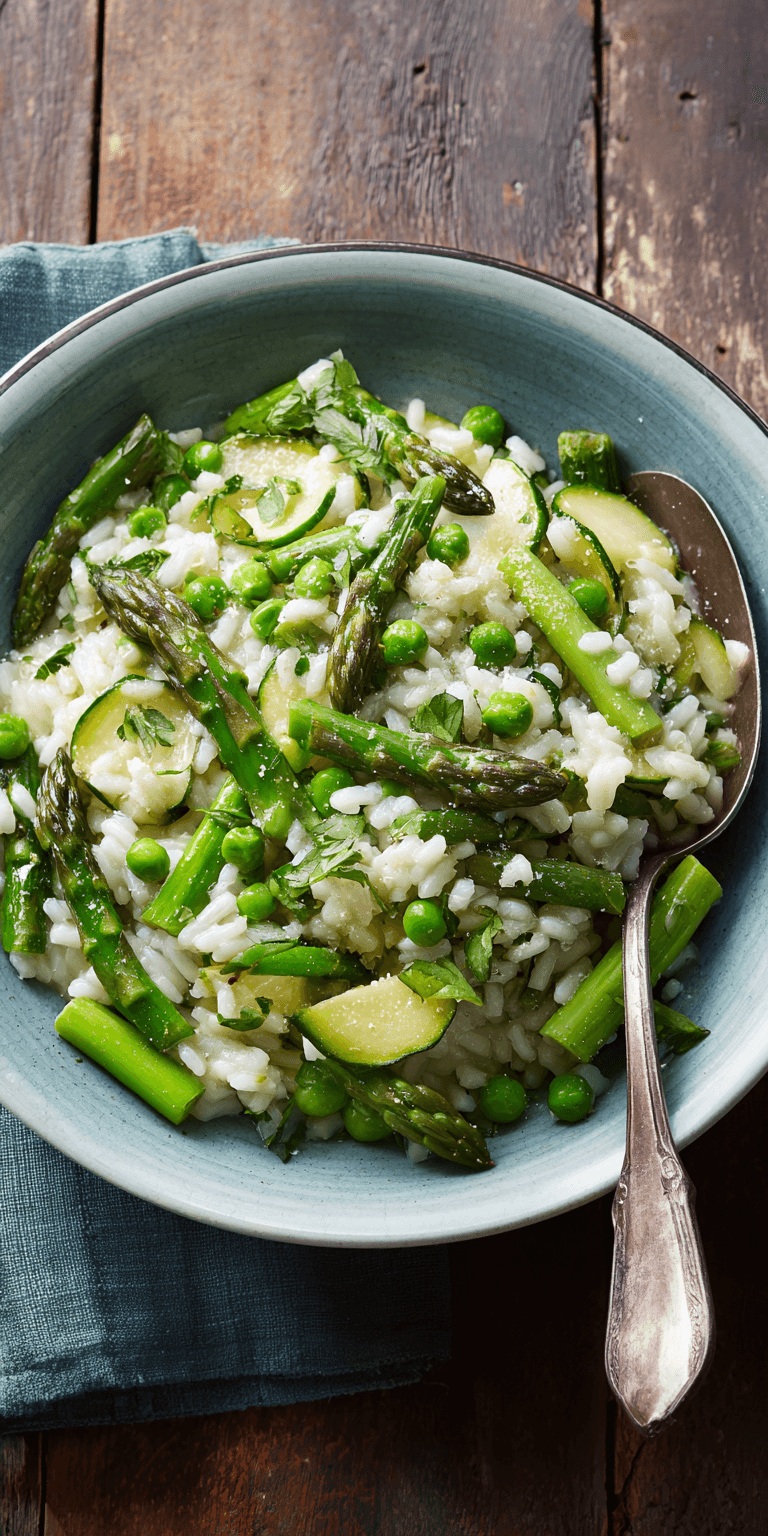
The gentle stirring, the slow addition of broth, and the final cloud of Parmesan cheese—it’s a ritual of comfort. With the first tender asparagus and sweet peas of the season, this dish feels like a celebration. It’s a way to welcome the new light and warmth into our homes.
This version is a true classic. It’s a creamy, vegetarian recipe that doesn’t need any wine to be wonderful. It’s all about letting those fresh spring veggies shine in a bowl of perfectly cooked, comforting rice.
Recipe Overview
- Cuisine: Italian-Inspired
- Category: Main Course
- Prep Time: 15 minutes
- Cook Time: 35 minutes
- Total Time: 50 minutes
- Servings: 4
The Story Behind This Classic Recipe
My grandmother didn’t call it “seasonal cooking.” She just cooked with what her garden or the market gave her. In early spring, that meant the first green things poking through the earth.
She’d make a simple risotto to stretch those precious first harvests into a meal that could feed our whole family. The act of standing at the stove, stirring and talking, was as much a part of the recipe as the rice itself.
It was a lesson in patience and care. Every time I make it, I remember those quiet afternoons. The smell alone brings me back.
Spring Vegetable Risotto Recipe
The Classic Ingredients (No Fancy Stuff!)
How to Make It Just Like Grandma Did
Notes
Enjoy your homemade Spring Vegetable Risotto Recipe!
What Makes This the *Traditional* Way
This isn’t a fast or fussy recipe. The traditional method is about building flavor slowly. We start by gently cooking onions in butter until they’re soft and sweet, not browned.
The rice is toasted just until it’s warm to the touch and slightly translucent at the edges. This step is key for that perfect, creamy texture later. The broth is added one ladle at a time, waiting for the rice to drink it up before adding more.
This constant, gentle encouragement is what coaxes the starch from the rice. It creates its own luxurious sauce. We finish with butter and cheese off the heat for a glossy, rich finish that can’t be rushed.
The Classic Ingredients (No Fancy Stuff!)
Great comfort food starts with simple, honest ingredients. Here’s what you’ll need to bring this spring classic to life.
- 6 cups low-sodium vegetable broth
- 2 tablespoons unsalted butter, divided
- 1 tablespoon olive oil
- 1 medium yellow onion, finely chopped
- 2 cloves garlic, minced
- 1 ½ cups Arborio rice
- 1 bunch asparagus (about 1 lb), woody ends snapped off, stalks cut into 1-inch pieces
- 1 cup fresh or frozen peas (no need to thaw if frozen)
- ½ cup grated Parmesan cheese, plus more for serving
- Salt and freshly ground black pepper to taste
- 2 tablespoons chopped fresh parsley or chives (optional, for garnish)
How to Make It Just Like Grandma Did
Put on some quiet music and give yourself to the process. This is where the magic happens, one ladleful at a time.
- Warm the broth in a medium saucepan over low heat. Keep it at a gentle simmer.
- In a large, heavy-bottomed pot or Dutch oven, melt 1 tablespoon of butter with the olive oil over medium heat. Add the chopped onion and a pinch of salt. Cook, stirring, until the onion is soft and translucent, about 5-7 minutes. Add the garlic and cook for 1 more minute until fragrant.
- Add the Arborio rice. Stir constantly for about 2 minutes, toasting the rice until the edges look slightly clear. This is called “tostatura” and it’s a non-negotiable step for great risotto.
- Begin adding the warm broth. Add one ladle (about ½ cup) and stir gently. Wait until the liquid is almost fully absorbed before adding the next ladle. Keep the heat at a steady medium so the rice bubbles softly.
- After about 15 minutes of adding broth, stir in the chopped asparagus. Continue adding broth and stirring.
- After about 5 more minutes, stir in the peas. Continue cooking and adding broth until the rice is tender but still has a slight bite (al dente) and the mixture is creamy. This usually takes 25-30 minutes total.
- Remove the pot from the heat. Stir in the remaining 1 tablespoon of butter and the ½ cup of grated Parmesan cheese. This final step, called “mantecatura,” makes the risotto incredibly rich and smooth.
- Taste and season with salt and pepper. Let it rest for 2 minutes, then serve immediately in warm bowls, garnished with herbs and extra cheese.
My Tips for Perfecting This Classic
A few simple tricks will make sure your risotto turns out perfectly creamy every single time.
First, keep your broth warm. Adding cold broth shocks the rice and stops the steady cooking. A simmering pot next to your risotto pot is the secret.
Second, trust the process. Don’t rush by adding too much broth at once. Let the rice guide you. The slow absorption is what makes it creamy.
Finally, use a wooden spoon for stirring. It’s gentle on the grains and just feels right for this kind of cooking.
How to Store and Enjoy Later
Risotto is always best fresh, but leftovers can still be a treat. Let it cool completely, then store it in an airtight container in the fridge for up to 2 days.
To reheat, add a splash of broth or water to a saucepan with the cold risotto. Warm it over low heat, stirring often, until it’s hot through. It won’t be quite as loose as when first made, but it will still be delicious.
I don’t suggest freezing it, as the rice can become mushy when thawed.
Nutrition Notes
This is a wholesome, satisfying meal built from simple ingredients. Here’s a general look at what’s in your bowl.
- Naturally vegetarian.
- Good source of fiber from the spring vegetables and Arborio rice.
- Provides protein from the rice and Parmesan cheese.
- Contains calcium from the dairy.
Your Questions About This Classic Recipe
Can I use a different type of rice?
For true classic risotto, Arborio rice is the best choice. Its high starch content is what creates the creamy texture. Carnaroli or Vialone Nano are also excellent, but can be harder to find. I don’t suggest using regular long-grain rice.
My risotto is too thick. What did I do wrong?
You might have cooked it a minute too long, or your heat was a bit high. Simply stir in an extra splash of warm broth or even a little hot water just before serving to loosen it up to your liking.
What other spring vegetables can I add?
Absolutely! Thinly sliced fennel, chopped artichoke hearts, or tender baby spinach are all wonderful additions. Just add quicker-cooking veggies (like spinach) at the very end, off the heat.
I hope this recipe brings a sense of peace and comfort to your kitchen. It’s more than just dinner; it’s a moment to slow down and cook with the seasons.
It connects us to simple traditions and the quiet joy of a meal made with care. I’d love to hear about your experience making it.
Did it bring back memories for you? What are your favorite spring vegetables to use? Please share your stories and your own tips in the comments below, and let me know how your risotto turned out!