
You’ve made roasted carrot soup before. I know you have. It’s a classic.
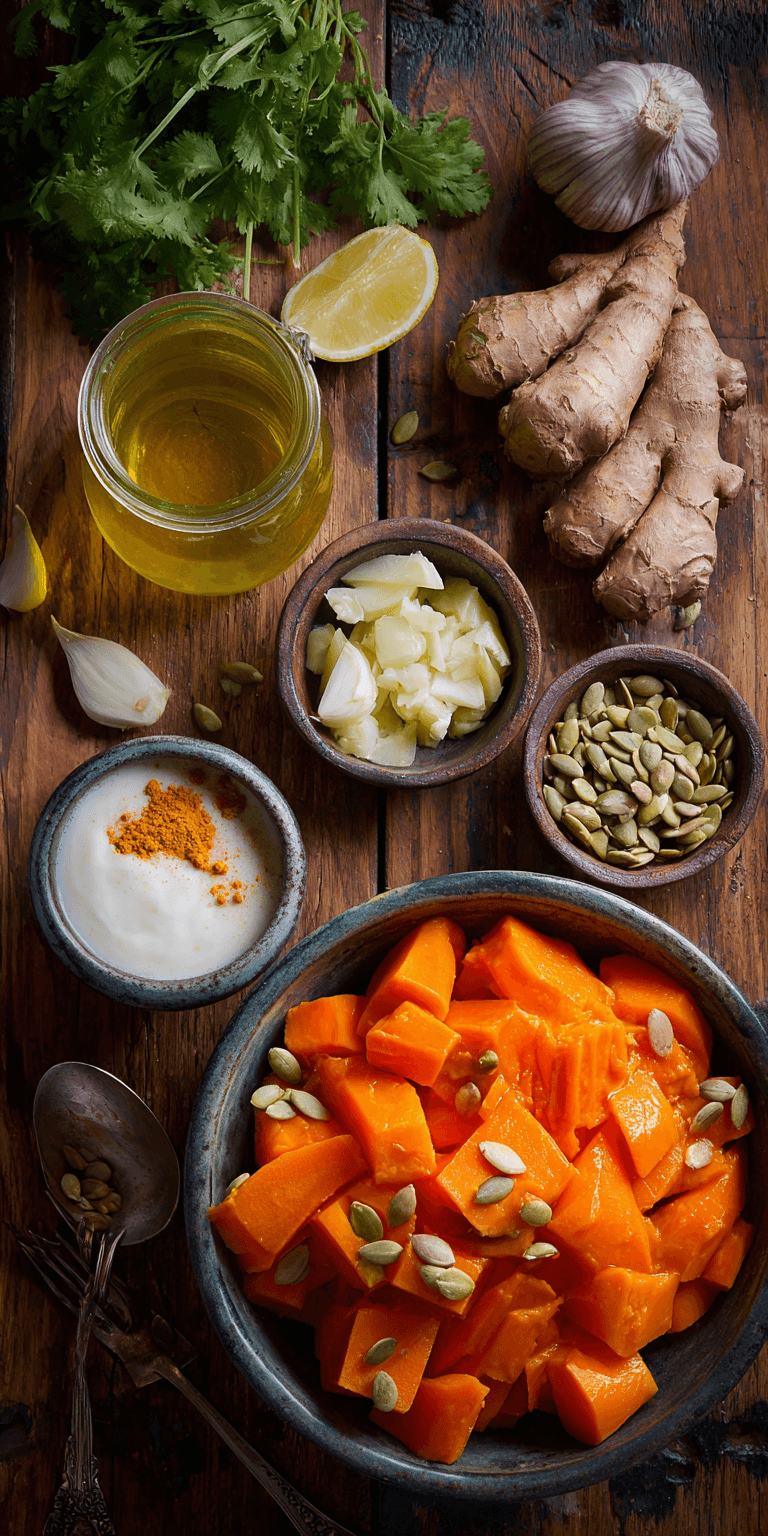
But I’m willing to bet it’s never tasted this deep, this vibrant, or had that certain “what is that?” quality that makes people ask for the recipe. That’s because you’re missing the one secret ingredient that changes everything.
Ready to find out what it is? Let’s make a Roasted Carrot & Ginger Soup that will redefine your idea of a simple vegan soup.
Recipe Overview
Here’s the quick look at what we’re making today. It’s straightforward, but the magic is in the details.
- Cuisine: Modern Vegan
- Category: Soup
- Prep Time: 15 minutes
- Cook Time: 45 minutes
- Total Time: 1 hour
- Servings: 4
The Secret Ingredient That Makes All the Difference
I’ve tested this for years. The answer isn’t more ginger or a fancy spice. It’s tomato paste.
You add it to the roasting pan for the last five minutes the carrots are in the oven. The high heat caramelizes the tomato paste’s sugars.
Roasted Carrot & Ginger Soup Recipe
The “Upgraded” Ingredient List
The Pro-Method (Step-by-Step)
Notes
Enjoy your homemade Roasted Carrot & Ginger Soup Recipe!
This gives the soup an incredible savory depth, a bass note that makes the carrot’s sweetness and ginger’s spice sing in harmony. It’s the soul of the soup.
Why This Method is Better (My Pro-Tips)
Most recipes boil the carrots. We are roasting them. This is non-negotiable.
Roasting concentrates the carrot’s natural sugars. It creates those beautiful browned edges that equal massive flavor. We also roast the onion and garlic right alongside them.
This hands-off step builds a flavor foundation you simply cannot get from a pot of simmering water. It’s the difference between a good soup and a great one.
The “Upgraded” Ingredient List
Every item here has a job. Use fresh, whole ingredients for the best result.
- 2 lbs carrots, peeled and cut into 1-inch chunks
- 1 large yellow onion, roughly chopped
- 1 whole head of garlic, top sliced off to expose cloves
- 3 tbsp olive oil, divided
- 1 tbsp tomato paste
- 1 (2-inch) piece of fresh ginger, peeled and grated (about 2 tbsp)
- 4 cups vegetable broth
- 1 (13.5 oz) can full-fat coconut milk
- Juice of 1/2 a lemon
- Salt and black pepper to taste
- For serving: a drizzle of coconut milk, fresh cilantro, or toasted pumpkin seeds
The Pro-Method (Step-by-Step)
Follow these steps in order. They are designed to build flavor at every single stage.
- Heat your oven to 425°F (220°C). On a large baking sheet, toss the carrot chunks and chopped onion with 2 tbsp olive oil. Season well with salt and pepper.
- Place the whole garlic head on a small piece of foil. Drizzle it with the remaining 1 tbsp of oil, wrap it up, and place it on the corner of the baking sheet.
- Roast for 25 minutes. Remove the pan, give the veggies a stir, and add the tomato paste in a dollop on the hot pan. Return to the oven for 5 more minutes. The tomato paste will darken and smell amazing.
- Let the pan cool slightly. Squeeze the soft, roasted garlic cloves out of their papery skins into a large soup pot.
- Scrape all the roasted carrots, onion, and that caramelized tomato paste into the pot with the garlic. Add the grated ginger.
- Pour in the vegetable broth. Bring to a boil, then reduce to a simmer for 15 minutes to let the flavors marry.
- Carefully blend the soup until perfectly smooth using an immersion blender. For the silkiest texture, use a standard blender, working in batches.
- Stir in the full-fat coconut milk and the fresh lemon juice. Taste. This is where you adjust. It will likely need more salt. The lemon juice is critical—it brightens all the rich, roasted flavors.
- Serve hot with your chosen toppings. A final crack of black pepper is a must.
Common Mistakes & How to Fix Them
Even advanced cooks can slip up here. Avoid these pitfalls.
Soup tastes flat or bland. You underseasoned. Salt is a flavor conductor, not just a seasoning. Add it in stages—after roasting, after blending, and at the end. The lemon juice at the finish is also key for acidity.
Soup is too thick or too thin. Too thick? Add more broth or water, 1/4 cup at a time. Too thin? Let it simmer uncovered for 5-10 minutes to reduce and concentrate. The coconut milk also adds body.
Ginger flavor is too sharp or weak. You used powdered ginger or didn’t use enough fresh. Powdered ginger tastes entirely different. Only use fresh, peeled, and grated ginger for that bright, spicy kick.
Variations for the Adventurous Cook
Mastered the base recipe? Try these pro-level swaps to make it your own.
Add a teaspoon of curry powder or turmeric to the roasting vegetables for a warm, spiced version. Swap the coconut milk for a splash of oat milk and a spoonful of tahini for a nuttier profile.
For a spicy kick, add a whole roasted jalapeño (seeds removed) to the pot before blending. You can also top it with crispy roasted chickpeas instead of seeds for extra texture and protein.
Nutrition Notes
This isn’t just tasty; it’s powerfully good for you. Here’s a simple breakdown per serving.
- High in Vitamin A (from all those carrots)
- Good source of anti-inflammatory compounds (thank you, ginger and garlic)
- Provides healthy fats from coconut milk
- Naturally vegan and gluten-free
- Low in saturated fat
Your Pro-Level Questions Answered
These are the questions I get from cooks who really want to understand the “why.”
Can I make this soup ahead of time?
Absolutely. In fact, it often tastes better the next day. Let it cool completely, then store it in an airtight container in the fridge for up to 4 days. Reheat gently on the stove.
Why full-fat coconut milk? Can I use light?
I strongly recommend full-fat. It provides a luxurious, creamy mouthfeel and a subtle sweetness that balances the ginger. Light coconut milk will make the soup thinner and less rich.
My blender won’t get it completely smooth. What can I do?
For restaurant-smooth soup, pass the blended soup through a fine-mesh sieve. It takes an extra minute but removes any tiny fibrous bits for an impossibly silky texture.
A Few Final Secrets
You now have the blueprint for an incredible soup. But a chef never stops learning.
The quality of your vegetable broth matters. Use a brand you like to drink on its own, or make your own. Don’t skip the fresh lemon juice at the end—it’s the wake-up call for all the flavors.
Finally, always taste and adjust before serving. Your palate is your best tool. Make the soup yours.
Now that you have the secret, I want to hear from you. Did the tomato paste change the game for you? What variations did you try? Rate this recipe and tell me all about it in the comments below!