
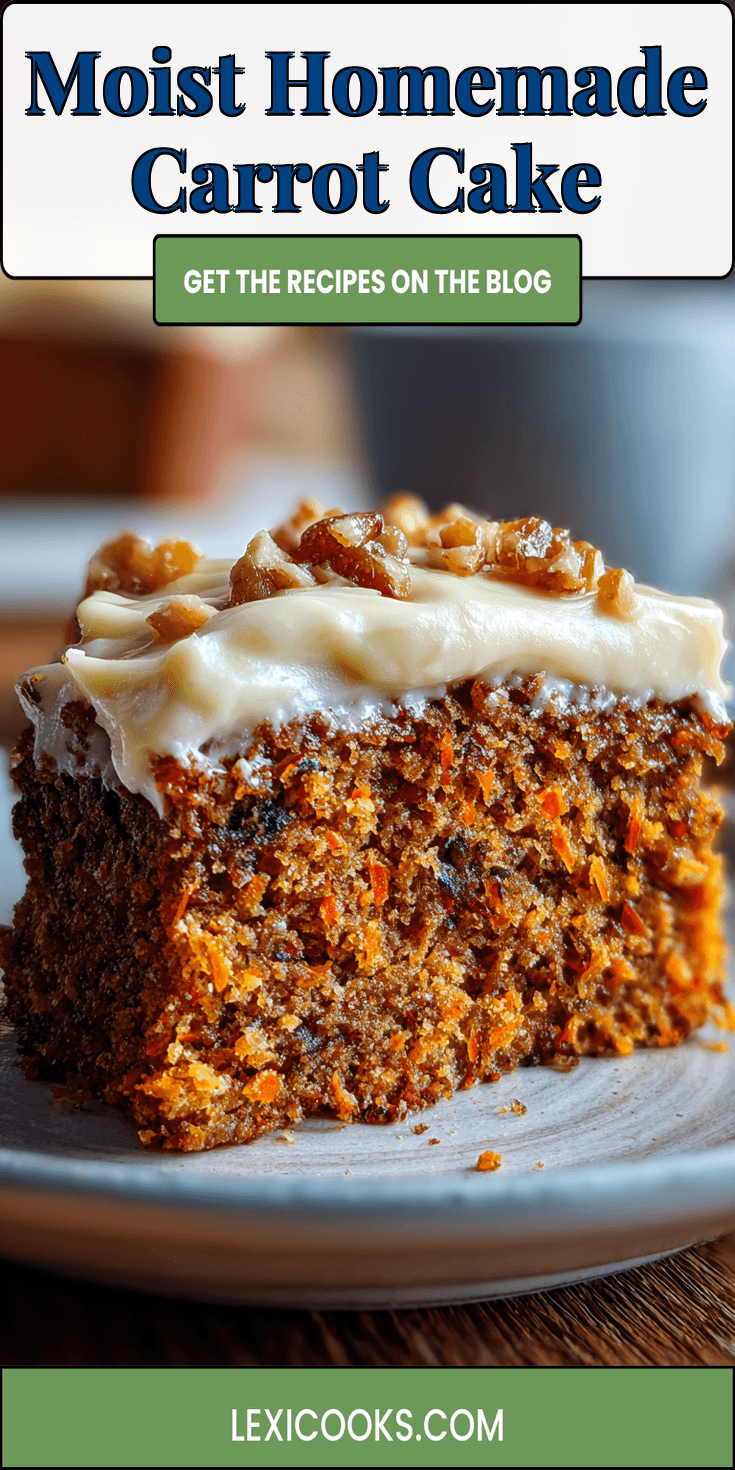
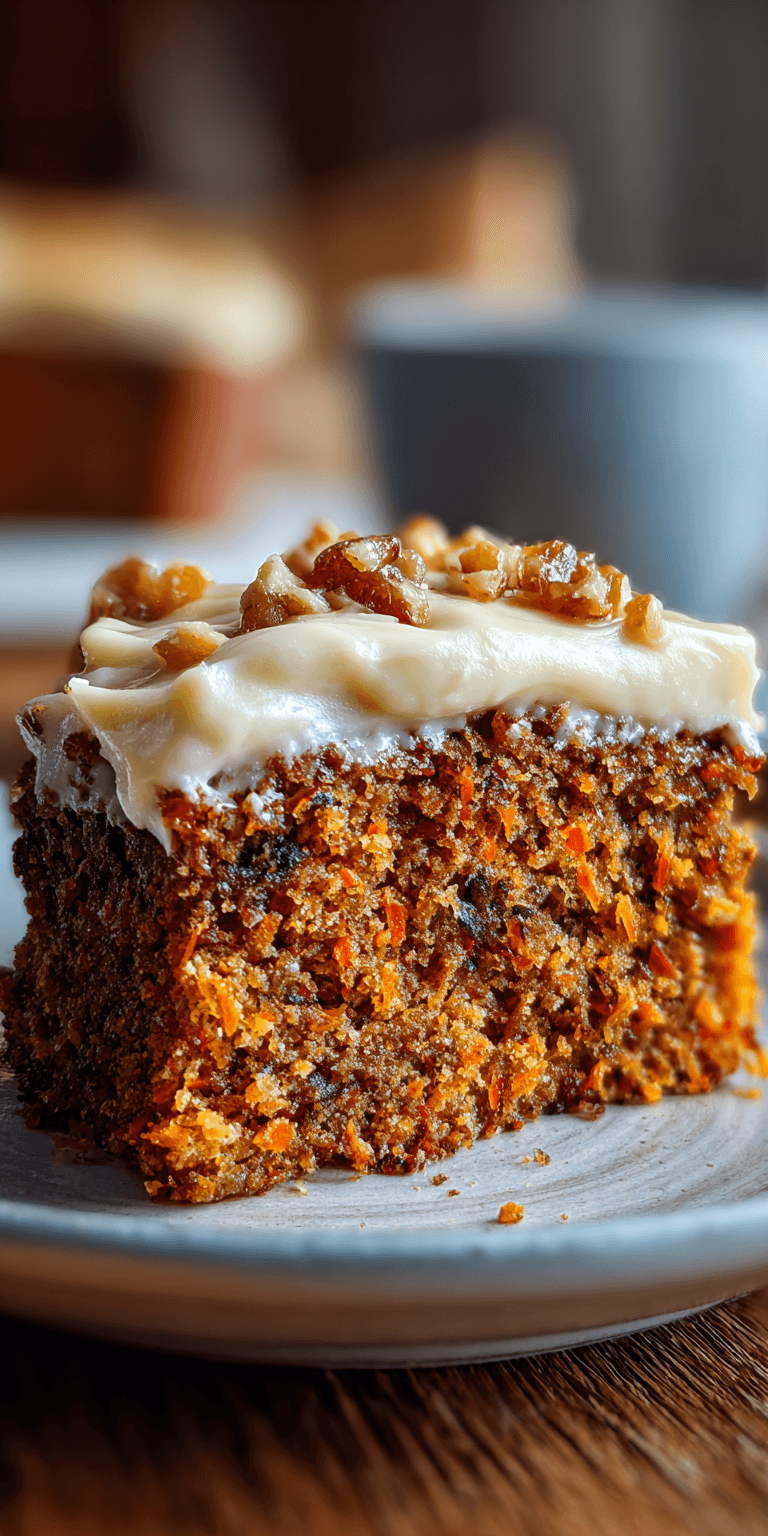
You’ve made carrot cake before. I know you have.
But you’ve never made one this moist. The kind that stays soft for days and has a flavor that makes you close your eyes. Ready for the secret that changes everything?
This isn’t just another recipe. It’s my pro-level blueprint for the ultimate Moist Homemade Carrot Cake. Forget dry, crumbly cakes. We’re building something legendary.
Recipe Overview
Here’s the quick look at what we’re making today. It’s simple on paper, but the magic is in the method.
- Cuisine: American
- Category: Dessert
- Prep Time: 25 minutes
- Cook Time: 35 minutes
- Total Time: 1 hour (plus cooling)
- Servings: 12
The Secret Ingredient That Makes All the Difference
I’ve tested everything. The answer isn’t more oil or an extra egg. It’s crushed pineapple.
Moist Homemade Carrot Cake Recipe
The “Upgraded” Ingredient List
The Pro-Method (Step-by-Step)
Notes
Enjoy your homemade Moist Homemade Carrot Cake Recipe!
Not big chunks, but finely crushed pineapple in its own juice. This is the game-changer. The natural enzymes and acidity break down the flour’s gluten just enough.
The result is an unbelievably tender crumb. The pineapple juice also keeps every single molecule of cake hydrated for days. You won’t taste a strong pineapple flavor, I promise.
You’ll just taste the deepest, most perfect carrot cake you’ve ever had.
Why This Method is Better (My Pro-Tips)
Most recipes just tell you to mix the wet and dry ingredients. We’re going further. My method controls the texture from start to finish.
First, we soak the raisins. Plump raisins won’t steal moisture from our batter. They become little bursts of flavor instead of dry, bitter bits.
Second, we mix the batter by hand. A stand mixer can over-develop the gluten in the flour too quickly. We want gentle folds and stirs for that soft, dense-perfect texture.
Finally, we bake low and slow. A slightly lower temperature lets the cake rise evenly without doming or drying out the edges. Patience is a pro tool.
The “Upgraded” Ingredient List
Every ingredient here has a job. Use room temperature items unless noted. It makes for a smoother, happier batter.
- 2 cups all-purpose flour
- 2 tsp baking soda
- 1 ½ tsp ground cinnamon
- ½ tsp ground nutmeg
- ½ tsp salt
- 1 cup granulated sugar
- 1 cup packed light brown sugar
- 1 ¼ cups neutral oil (like avocado or canola)
- 4 large eggs, room temp
- 1 tsp pure vanilla extract
- 3 cups finely grated carrots (about 5-6 medium)
- 1 cup sweetened shredded coconut
- 1 cup chopped walnuts or pecans
- 1/2 cup raisins, soaked in hot water for 10 min, then drained
- 1 (8 oz) can crushed pineapple in juice, NOT drained
For the Frosting:
- 12 oz full-fat brick cream cheese, cold
- ¾ cup unsalted butter, softened
- 1 tsp pure vanilla extract
- ¼ tsp salt
- 4 cups powdered sugar, sifted
The Pro-Method (Step-by-Step)
Follow these steps in order. This is where we put the theory into practice.
- Heat your oven to 325°F (163°C). Grease and flour two 9-inch round pans. Line the bottoms with parchment paper. This guarantees a clean release.
- In a large bowl, whisk the flour, baking soda, cinnamon, nutmeg, and salt. Set this dry mix aside.
- In another large bowl, whisk the white sugar, brown sugar, and oil until smooth. Add the eggs one at a time, whisking well after each. Stir in the vanilla.
- Add the dry flour mix to the wet sugar mix. Use a sturdy spatula and fold gently until just combined. No white streaks should remain, but don’t over-mix.
- Now, fold in the grated carrots, coconut, nuts, drained raisins, and the entire can of crushed pineapple (with juice). The batter will be thick and shaggy. That’s perfect.
- Divide the batter evenly between your prepared pans. Smooth the tops. Bake for 32-38 minutes. A toothpick inserted in the center should come out with just a few moist crumbs.
- Let the cakes cool in the pans on a wire rack for 20 minutes. Then, run a knife around the edge and invert them onto the rack to cool completely. They must be fully cool before frosting.
- Make the frosting: Beat the cold cream cheese and softened butter with a mixer until perfectly smooth and lump-free. Beat in the vanilla and salt. Gradually add the sifted powdered sugar on low speed until combined, then beat on medium-high for 2 minutes until fluffy.
- Frost the cooled cake. Place one layer on a plate, spread with frosting, add the second layer, and frost the top and sides. Decorate with extra nuts if you like.
Common Mistakes & How to Fix Them
Even pros hit snags. Here’s how to avoid the big ones.
Problem: A sunken middle. This usually means too much baking soda or under-baking. Fix: Measure your soda precisely. Also, test for doneness a few minutes before the timer. The cake should spring back when lightly touched.
Problem: Dense, greasy texture. Fix: You likely over-mixed the batter after adding the flour. Once the flour is hydrated, mixing develops gluten. Fold, don’t beat. Also, make sure your baking soda is fresh.
Problem: Runny frosting. Fix: Your cream cheese or butter was too warm. For a stable frosting, use cold cream cheese and just-softened butter. If it’s already runny, chill the whole bowl for 20 minutes, then re-whip.
Variations for the Adventurous Cook
Mastered the base recipe? Let’s play. These swaps take it to another level.
Swap the walnuts for toasted pecans for a deeper, buttery note. You could also add 1/2 cup of diced dried mango with the raisins for a tropical twist that pairs with the pineapple.
For a quick dessert shortcut, bake the batter in a 9×13 pan. Skip the layer frosting and just spread a thin coat over the top. It’s just as delicious and serves a crowd faster.
Love fun textures? Fold in 1 cup of crushed Fruity Pebbles cookies (or the cereal itself) with the carrots. It adds a crazy color pop and a subtle, fruity crunch that kids adore.
Nutrition Notes
This is a celebratory cake. Enjoy it as such. Here’s a rough breakdown per serving (with frosting).
- Calories: ~680
- Carbohydrates: 78g
- Protein: 6g
- Fat: 40g
- Saturated Fat: 13g
- Fiber: 2g
- Sugar: 62g
Your Pro-Level Questions Answered
These are the questions I get from bakers who want to understand the “why.”
Can I make this cake ahead of time?
Absolutely. In fact, I recommend it. Bake the layers, let them cool completely, then wrap them tightly in plastic wrap. Store them at room temperature for one day or freeze for up to 3 months. The flavors meld and improve. Frost it the day you serve it.
Why do my carrots need to be finely grated?
Texture control. Large shreds can sink and create wet pockets. Fine grating lets the carrot distribute evenly and almost melt into the batter, giving moisture without chunks. Use the small holes on your box grater.
What’s the best way to store the finished cake?
Because of the cream cheese frosting, it must be refrigerated. Store it in a cake carrier or loosely covered with foil. Let it sit at room temperature for 30-60 minutes before serving to take the chill off and soften the crumb.
A Few Final Secrets
You now have the blueprint. But a true pro knows the finishing touches.
For an extra flavor boost, toast your nuts and coconut before adding them to the batter. It takes five minutes and adds a whole new layer of depth.
When grating carrots, avoid the pre-shredded bagged kind. They’re often too dry and thick. Freshly grated carrots have more moisture and a better texture.
If you want a show-stopper, double the frosting recipe. Use a piping bag to create a beautiful swirl border on top. Press whole toasted pecans around the sides for a professional finish.
Now that you have the secret, go try it! I want to hear all about it. Did the pineapple change the game for you? Did you try the Fruity Pebbles twist? Let me know how your perfect carrot cake turns out in the comments below—and don’t forget to rate the recipe!