
Some recipes just feel like a warm hug. For me, this classic Creamy Asparagus & Potato Soup is one of them. It’s the taste of a gentle spring day, when the first green shoots push through the earth and the air still holds a little chill.

It takes me right back to my grandma’s kitchen. She’d make a big pot of this soup when the asparagus was fresh from the garden. The smell of it simmering on the stove was pure comfort. It promised a simple, satisfying meal that would fill you up and make you feel cared for.
This is a vegetarian soup that celebrates those humble, perfect ingredients. It’s a creamy broth that’s both light and rich, a true spring lunch that feels like a celebration of the season. I want to share that feeling with you.
Recipe Overview
- Cuisine: American / Traditional
- Category: Soup
- Prep Time: 15 minutes
- Cook Time: 30 minutes
- Total Time: 45 minutes
- Servings: 4-6
The Story Behind This Classic Recipe
My grandma grew up on a farm. For her, cooking wasn’t about fancy techniques. It was about using what you had, when you had it. In early spring, that meant potatoes from the root cellar and the very first, tender asparagus.
She would snap the ends off the asparagus right at the kitchen table. I can still hear the crisp *pop*. This soup was her way of bridging the seasons. It used the last of the stored potatoes and welcomed the first new green of the year.
It was never written down. She just knew. She’d taste, adjust, and smile. Making this soup now is my way of connecting with her and that simpler time. It’s a taste of memory.
Creamy Asparagus & Potato Soup Recipe
The Classic Ingredients (No Fancy Stuff!)
How to Make It Just Like Grandma Did
Notes
Enjoy your homemade Creamy Asparagus & Potato Soup Recipe!
What Makes This the *Traditional* Way
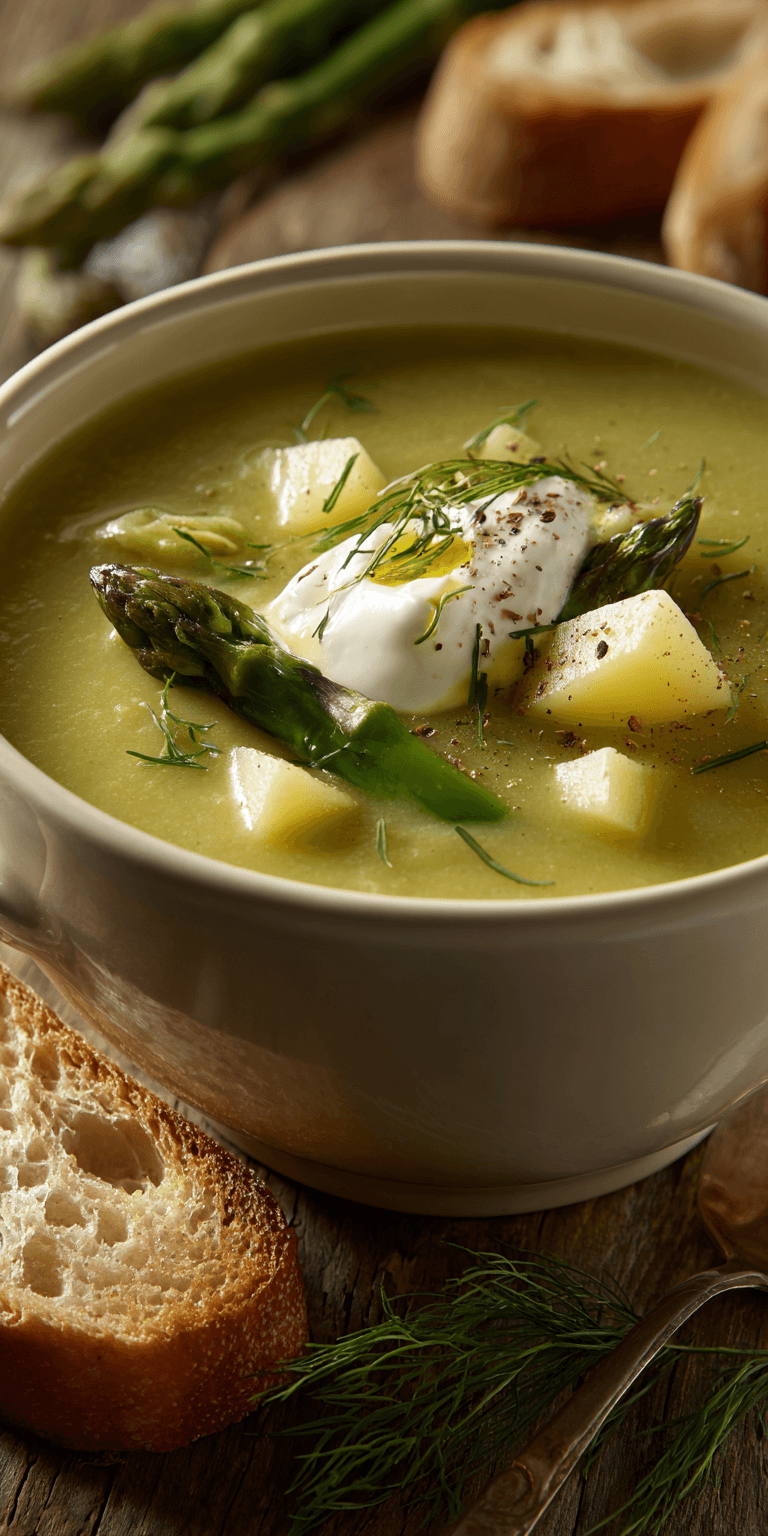
This isn’t a modern, blended-to-silken-smooth soup. The traditional way has more heart. It’s about building flavor in layers, starting with a simple base of butter and onion.
The potatoes are cut into small cubes, not blended away. They break down a little to thicken the broth naturally. The asparagus is added in two stages. This gives you tender pieces and a brighter, fresher flavor right at the end.
We use whole milk or a splash of cream for richness. It’s just enough to make it creamy without being heavy. The final touch is always a little black pepper. It makes all the flavors come alive.
The Classic Ingredients (No Fancy Stuff!)
This list is short and sweet. Every item has a job to do. You probably have most of it in your kitchen right now.
- 2 lbs fresh asparagus
- 1.5 lbs Yukon Gold potatoes (about 3-4 medium)
- 1 medium yellow onion
- 3 cloves garlic
- 4 tablespoons unsalted butter
- 4 cups vegetable broth
- 1 cup whole milk or half-and-half
- 1 teaspoon salt, plus more to taste
- 1/2 teaspoon black pepper
How to Make It Just Like Grandma Did
Follow these steps and your kitchen will smell incredible. Don’t rush the first step. That’s where the magic starts.
- Get your veggies ready. Snap the tough ends off the asparagus. Cut the spears into 1-inch pieces, but keep the tips separate. Peel and dice the potatoes. Chop the onion and mince the garlic.
- In a large soup pot, melt the butter over medium heat. Add the chopped onion and cook until it’s soft and translucent, about 5 minutes. Stir in the garlic for just one minute until it’s fragrant.
- Add the diced potatoes and the asparagus pieces (not the tips yet) to the pot. Stir everything so the butter coats them. Let them cook together for about 3 minutes.
- Pour in the vegetable broth. Bring it to a boil, then lower the heat to a gentle simmer. Let it cook until the potatoes are very tender, about 15-20 minutes.
- Now, use a potato masher right in the pot. Mash about half of the potatoes and asparagus. This will thicken the soup beautifully and give it that classic, rustic texture.
- Add the reserved asparagus tips and the milk or cream. Let the soup simmer for another 5-7 minutes, just until the tips are bright green and tender.
- Take the pot off the heat. Stir in the salt and pepper. Taste it! This is the most important step. Add a little more salt if it needs it to make the flavors shine through.
My Tips for Perfecting This Classic
A couple of small things can make a big difference. They turn a good soup into a great one.
First, trust the snap. To find where the tough part of the asparagus ends, just hold a spear at both ends and bend it. It will break naturally at the perfect spot. This guarantees every bite is tender.
Second, don’t skip the mashing step. Blending the whole soup makes it too smooth and baby-food-like. Mashing some of it gives you the best texture: creamy with lovely little bites of vegetable throughout.
How to Store and Enjoy Later
This soup stores wonderfully. Let it cool completely, then keep it in a sealed container in the fridge for up to 4 days.
The flavors actually get better the next day. When you reheat it, do so gently on the stove over low heat. You might need to add a splash of broth or milk if it has thickened up.
You can freeze it for up to 3 months. I find it freezes best without the cream. Add the milk or cream when you reheat it after thawing.
Nutrition Notes
- This is a hearty, vegetable-forward soup.
- It’s a good source of fiber from the asparagus and potatoes.
- Using vegetable broth keeps it completely vegetarian.
- For a lighter version, you can use low-fat milk. The potatoes will still give it a creamy feel.
Your Questions About This Classic Recipe
Can I use frozen asparagus?
You can, but fresh is best for this traditional recipe. If you use frozen, thaw and drain it well first. Add it all at the end with the cream, since it’s already pre-cooked. The texture will be softer, but the flavor will still be good.
My soup is too thin. How can I thicken it?
Make sure you mash the potatoes well right in the pot. If it’s still too thin, let it simmer uncovered for an extra 5-10 minutes. This will cook off some of the liquid and concentrate the flavors. You can also mash a few more potato pieces.

What can I serve with this soup?
A thick slice of crusty, buttered bread is the perfect partner. It’s ideal for dipping. A simple green salad with a sharp vinaigrette also pairs nicely. It cuts through the soup’s creaminess in a very satisfying way.
I hope this recipe finds a place in your own kitchen tradition. It’s more than just a list of ingredients and steps. It’s a bowl of quiet comfort, a taste of spring, and a connection to the cooks who came before us.
Make it on a lazy weekend afternoon. Share it with someone you love. I promise, its simple goodness will warm you from the inside out. Let me know how it turns out for you. Did it bring back any memories of your own? Please share your thoughts and stories in the comments below!